Wednesday, 3 October 2012

Only-Mens-Land

I promised you a story about men in Central Asia; and I usually do keep my promises!

Why about men - and why exactly in Central Asia... well, apart from a few delightful exceptions, I literally only had conversations with men throughout my entire time - 8 weeks - in Central Asia. Central Asian societies are definitely men dominated.

I could of course mention the "you have a shooting star shining on your forehead" of a Kyrgyz man, or the endless compliments and love-statements of the guys we hitched with in Tajikistan, or the persisting squeezy hugs of our donkey-guide in Tajikistan more in detail - but I guess the country which deserves most to be the talked about in this story is Uzbekistan.


I am happy to announce the Winner of the Golden Raspberry for least charming men: Uzbekistan

I should have counted the amount of times we had been called красавицa (beauty) in Uzbekistan (man, I really can't hear that word anymore).
Uzbekistan itself is a land of beauties indeed, when it comes to the beautiful historical buildings in Samarkand, Bukhara and Khiva. But definitely it is not a country of beautiful and refine poetry...

And Uzbekistan is also a really paranoid country - a country with huge tons of books containing long lists of names and passportnumbers: Foreigners need to be registered within 3 days they stay in one city. However, we heard stories of people who had to pay huge fines when wanting to leave the country, because they were missing registrations for only one single night. As we'd been couchsurfing for three consecutive nights in Tashkent we ended up buying missing registration slips to cover the missing nights.

What this has to do with men?! Oh well - on our first ride in a shared taxi from the border to Tashkent we had to get registered at police checkpoints - twice.
But at least we got compensated for the trouble: wooooo, such a cutie! One of the police man was definitely more interested in flirting with us than writing our names correctly into his wise book...


Police men - what an interesting topic!
We arrived in Tashkent and of course: the first thing that happened was that one of the million policemen controlling each metro entry asked me to open my backpack. For future similar situations Lise and me planned to put our undies, tampons and / or condoms right on top to embarrass the police man. Too bad we never got checked again...

Nope, definitely not done with the policeman topic!
Samarkand - beautiful Samarkand! Samarkand is definitely really beautiful and not yet being saturated by all the blue tiles and mosaiks we took endless amounts of photos - you can enjoy them in my new gallery!


Before talking about the cutie whom we gave our telephone number on the bus I'll continue on the police man story...
One of the open secrets in Samarkand is that you can go up one of the minarets of the Registan, Samarkands core touristic sight. However, the thing with the minaret is that it is closed to the public. But if you go there before the opening time and bribe the guards you can get up. No wonder its closed to the public by the way: it was a really dangerous to climb up (it's the right minaret which penches a bit like the tower of Pisa)

So there we were - at 6am in front of the Registan arguing with the guarding policeman about a fair price to get up the minaret. I'm not sure the minaret itself was worth the USD5,- , but having the Registan just for ourselves and with all the touristy shops still closed hence leaving the place in total peace, was definitely worth it!

The guy immediately - after having received the brige - got really fond of us, offering us to get us into the Registan for much cheaper during opening hours and for free for an additional night-tour. Well, sure, why not!


So back we came - after a relaxing breakfast in the nice guesthouse - to see the great medressas in daylight with its souvenir shops and the magnificent interiours of the golden dome: it's simply stunning!


Night tour all by ourselves?! Sure we will - so again back in the late evening to walk through the only for us beautifully lit Registan. Taking a small break the policeman then walked us all the way to the nearby Bibi-Khanym mosque offering us ice-cream on the way.

Typical behaviour of policeman?! I guess not - typical behaviour of Uzbek men?! Oh yes, for sure...


The guy on the bus?!
Haha, that was another funny story: when arriving in Samarkand we found the guy collecting the money was kind of a cute so we gave him our number. In the evening we then met with him and his cousin, who became our personal off-the-mainsights guides - or mainly eateries guides.

It was fun hanging out with them: they brought us to the best shashlyk restaurant of Samarkand, where we had our best shashlyk not only of Samarkand but of our entire Cenral Asia experience (and we did have a lot of shashlyks!). They also taught us how to eat the most traditional Uzbek dish - plov!


I guess you should rather watch how the guy eats, because if you copy my clumpsy way of eating you'll end up making the same big mess on the table - and in your face...


These two definitely were nice guys, but well, I found it a tiny little bit exaggerated to talk about our future kids and big love when still not being able to pronounce my name properly...

I don't really know, where Uzbek guys learned to flirt from and even less, who made them think that they were IRRESISTIBLE. But it seems like a common pattern...

From Samarkand to Bukhara we were again in a shared taxis, the most commong means of transport in Central Asia. In Uzbekistan most of the cars run on gas. Yes gas!! They have huge kegs of gas in their trunks - I had never seen this before.
Anyhow, when they fill up the gas at the gas station (now this word has sense!) all passengers have to leave the car. While we were therefore waiting, the other guy from the shared taxi asked me for my Austrian phone number. He was angrily surpised that I didn't give it to him, as if it was his natural right to get my number. Not enough: he then asked me if he could write something down in English in my small notebook; and seriously wrote "Love"...

COME ON GUYS!! YOU CAN'T BE SERIOUS, RIGHT?!


After that, we were applying our guidebooks suggestion: to answer the inevitable question, wheter we're married or not, with a convincing "yes". In the remaining historical cities we visited in Uzbekistan - Bukhara and Khiva - we had a really relaxed time, walking around by ourselves and enjoying the sunset over the laid back towns...


Thursday, 20 September 2012

donkeys rule!


What do you guys know about Tajikistan?
What?!
Hm...


yes, the capital is Dushanbe. Correct! You were quite fast in checking this on wikipedia ;)

I do admit that me too I didn't know anything, literally ANYTHING about Tajikistan before showing more interest in the region all together. And when deciding what I want to see and do in Tajikistan, I was following the same ideas like everybody: doing the famous Pamir Highway. Many people we met in Central Asia were travelling by bike and the Pamir Highway is a really famous road for bikers. But even in a car it is well worth doing it. That's what I think, because in the end I didn’t go there (all photos of mountains here are from the Fan Mountains, not the Pamirs)...

When I applied for my visa to Tajikistan in Almaty in the end of July, I also wanted a GBAO-permit. GBOA stands for "Gorno Badakshan Automous Oblast", which is the region the Pamirs are actually in. But just one or two days before my application, a powerful former KGB-officer had been stabbed to death in regions capital Khorog. The incident lead to heavy military presence in the region (against the opposition strongman Tolib Ayombekov, who was suspected to be involved), the total blockage of the region and turmults with many deaths – and a closure of the region to tourists, which is still effective as I am writing this story right now. So: sorry, no GBAO-permit.

You can imagine that such an incident has a long history before happening, and I am trying my best now to recite a bit about Tajikistans history – not only because it in the end affected my travels, but also because I think that Tajikistan is a great country and it is worth knowing more about it.*
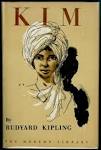
It is quite funny that I am now, in a completely different country, again encountering Rudyard Kipling – a famous English writer and poet. Remember?! In my story about Burma I had included one of his poems. It was him, who introduced the term “the Great Game” in his novel "Kim" for the subtle fight for power and land between the Russian and British Empire. Lying just between the two, Central Asia was of course the region of interest in this conflict. If you have ever wondered why Afghanistan has such a weird little finger (the Wakhan Valley) hanging out, well – that was the buffer zone between the two big Empires, which ended when the borders had finally been set in the late 1890s. This conflict has had a big impact on the region and has influenced the power share of the clans and the borders for the future to come.

Tajikistan had always been the poorest of all Sovereign Soviet Republics; and it was the Union who managed “to hold the lit on the pressure-cooker of the clan-based tensions that had long existed before the Russian invention.” (LP Central Asia 2010: 376) But once the Soviet Union fell apart and the different states declared independence – Tajikistan on the 9th Septeber 1991 – the whole thing blew off: uprisings, elections, opposition in exile and finally a civil war, which destroyed even more of the already poor country and its economy. The civil war ended with a peace agreement in 1997. The first president of the republic Emomalii Rahmon, elected in 1992, is still in power today and is most probably winning the elections again next year – making him president for four instead of two allowed terms (the courts had decided that the first two terms didn’t count).

After having been to Kazakhstan, Uzbekistan and Kyrgyzstan, I also saw that Tajikistan was definitely the poorest out of these four countries. The only road between the capital Dushanbe and the country’s second city Khojand (7 hours drive) is mostly ok, but has a long section of at least one hour on a completely bumpy, dusty and highly dangerous mountain road (they are building a tunnel right now). Another section of this road goes through an already existing tunnel, which doesn’t (yet) deserve this name: they finished the hole through the mountain and now the whole traffic is leading through this hole, on an unsealed bumpy road with big holes covered with water, and without any light. The workers, who are finishing the tunnel (the escape routes, putting the electricity, sealing the road, and doing everything else that has to be done to make a tunnel out of a hole in a mountain) have to work inside this hell hole next to cars and big trucks passing them. During our time in Tajikistan we were going through this hole four times – four times for around 15 minutes in this horrible hole.

Apart from this road we didn’t see many sealed roads at all. All the roads into the valleys are dusty, bumpy, unsealed roads which are not easy to drive on unless you have a 4WD.
So yes, Tajikistan is still a really poor country, and this comment proves it: “the annual national budget of Tajikistan remains less than the budget of a major Hollywood move, and 40% of that is required for the upkeep of the military presence on the Afghan border.” (Lonely Planet 2010: 378) Many Tajiks are therefore working in Russia (mainly in construction) and are sending a lot of money back home. So the remittances make up a large part of the national income. We met quite some people whose sons were working in Moscow (leaving wives and children with the parents) or had been working in Moscow by themselves to earn more money.

But still: a big part of the national income is sadly related to the drug traffic: “50% of Tajikistan’s economic activity is thought to be somehow linked to the drug trade.” (Lonely Planet 2010: 378) – And here I am coming to the end of my short historic and economical introduction, leading me back to the starting point: the incident in Khorog, which was the reason for to the closure of the Pamirs:

A French girl we met in Dushanbe, who is writing her thesis in anthropology about Tajik women, told us what she had heard about the incidet (so all this here is rumours after all): after the civil war the guerrilla fighter from the Pamirs had been integrated into the system and the former leaders got higher positions in the police, military or administration (however, never gave back their arms)– like it was also the case for this former KGB. He had somehow been involved with the smuggling of a whole truck full of cigarettes from Afghanistan, which had been stopped and seized by the police around Khuyab (the region of the actual president). Of course this led to problems, because the cigarettes hadn’t been delivered and the providers still wanted money and in all this turmoil the guy got killed. The result for the people in the Pamirs was terrible though: without many of them knowing anything about it, the region had been literally shut from the rest of the country overnight a few days after the incident: they cut any existing internet connection, the mobile reception and the roads and sent heavy military into the region. Many people died during the invention.

Long story, just to tell you that finally I couldn’t make it to the Pamirs... But Tajikistan is more than just the Pamirs, and we were really happy with what we managed to see in the few days we stayed in the country. Tajikistan is so much more than just the Pamirs, and when looking at the map right now, I really wonder why other travellers sometimes say “Tajikistan is closed” (as equivalent to “The Pamirs are closed”, when we told them that we were heading there, as if there was nothing else to do in Tajikistan.

We concentrated our short stay onto two things: Dushanbe (guess why… Wow!! You got it! Visa applications) and while waiting for the visa we went into the Zerafshan valley, a region which is – at least among tourists –well known for its treks. Through a guesthouse of the valleys capital Penjikent we had organized everything we needed: a tent, one more sleeping-bag, mats, a donkey, who would carry our load and a donkey-man, who would accompany and guide us and take care of the donkey. At the local bazaar we bought tons of food (knowing we wouldn’t have to carry it by ourselves) and then finally took the bus to the small village, from where the trek would start and where our donkey-man awaited us already – with vodka.

The trek through the Fan mountains and past beautiful aquamarine blue and turquoise lakes was just amazing. A Swiss couple we had met a week before had told us that the Fan mountains were only “Geröll” (rubble). Man, guys!! Open your eyes!! Yes, the mountains are really stony and there are not many trees around – but still, the nature is breathtaking!

We were walking around 6 hours every day, the second day led us over the 3.860m high Allaydin pass. I really had to get used to the high altitude and the lack of oxygen: even though we were taking mini-steps and were walking really slowly, we were breathing louder than any grandmother walking up steep stairs.

Every evening our nice guide would cook for us and while waiting for the food to be ready, we would start drinking vodka with zakuskis. Well, vodka in post-USSR is a big thing: and if you don’t want more than one shot, well, rather stick with none at all: once you started drinking with people, you’re will never ever be allowed to stop anymore…

On the third day we split again – while our guide walked back (everything in one day), we went further to the first village – which was according to our guide and other guides staying in tents across the lake only 3 hours away. Well, maybe three hours for them or in a car! We finally walked another 6 hours, and when we finally arrived in the tiny farmers village Marguzor, we realized that we had walked 22km. (Who the hell walks, not runs, walks 22km in 3 hours?!)

In Marguzor we immediately were guided to the local homestay, which is part of the ZTDA-network, a community-based tourism network build with the help of Germans. Like it was the case with the CBT in Kyrgyzstan, I had written about in my last story, the ZTDA has an open price policy and provides a lot of services apart from homestays and aims for a win-win-situation for both the tourists and the local communities.

Staying in this tiny village we saw a lot about the everyday life of people on the countryside or in the mountains. Everybody in the village was involved in the harvest and therefore really busy: we saw many people working on the fields, girls picking fruits, and kids bringing donkeys to where they were needed. In the village itself huge piles of grains were on the floor and donkeys would be walking on them to get the grains out (at least, that’s what we think they are doing. We bloody city-people don’t have any idea about absolutely basic farming anymore…)

Whereas in Dushanbe people would dress rather modern and fashionable, in the mountains people all dress the same: the women have colourful dresses covering their figures and headscarves and the men have trousers and shirts and the typical Tajik hat.

In the various shared taxis from and to and again from and to Dushanbe we had the chance to talk with many people of course. It is amazing that some questions stay the same all over the whole region: “Вы откуда? Вы замужем? Дети есть? Сколько у Вас лет?“ „Where are you from? Are you married? Do you have children? How old are you?” – when answering no to both – the married and kids – questions you’ll get a really perplexed look or the answer, that with your age nobody would take you anymore… nice, thank you!

But every country has its particular questions too. In Tajikistan it is a lot about money: how many times where we asked how much it would cost to travel to Europe. Or how much the average pay in our country is (we don’t really like these questions and when answering them usually point out that life is much more expensive back home, because we really don’t want them to believe that Europe is all super-easy and everybody back home is rich).
And after a few phrases they want you to invite them to Europe…

One of the men (of course always men...) who would ask us a lot about our lives back home, was the cotton grower Abdullak. We met him first on our initial ride from the North to Dushanbe, where he went to because he was about to receive a medal of honour from the president: he had founded a cotton company in the North, with which he created loads of work in the region. Somehow this remembered me of the medals for the best worker in the USSR... And according to him he is now the biggest cotton grower in the whole Khojand region. We met him again the next day by chance when walking down the main ally of Dushanbe, when he already had a nice medal pinned to his suit.

And again I can only underline that people in Central Asia are really, really inviting and guest friendly: he not only invited us to have lunch with him in Dushanbe, but also invited us to his home in Khojand (the country’s second largest city in the North, next to Uzbekistan). We couldn’t make it to his home, because we only realised then that he in fact lived far away from Khojand itself. So when we passed Khojand again he came all the way from his home to pick us up and have dinner with us...

Oh yes, dear men of Central Asia - my next story will be entirely about you...


Like always: check out the great photos of Tajikistan in my gallery, and I also updated the money-page.

*At the time of writing I was sitting in a train and was hence mostly using the Lonely Planet as source of information in lack of internet connection and other sources.

Wednesday, 5 September 2012

Community Based Tourism

Bishkek, oh yes, Bishkek...

Bishkek is a sweet small town, with a lot of trees and parks. And many embassies. The people there are completely different from those on the countryside: there are many Kyrgyz citizens of Russian nationality (yes, there is a difference between nationality and citizenship), most of which don’t even speak Kyrgyz. As a capital city the town has everything you might need: it is quite modern, has clean cafés and restaurants and fancy shopping malls, and ... it has many embassies.

So Bishkek was our hub. Not because of the nice parks, but - you guessed it - because of the embassies... In total we passed through Bishkek three times: first I put my documents to the Iranian and Uzbek embassy, Lise only to the Uzbek embassy while waiting for her reference number for the Iranian visa (which I had ordered earlier). On our second visit to Bishkek I was happy to collect my Iranian visa (on the photo of which I had to wear a headscarf...), while Lise could only now apply for it, having the received her reference number in the meanwhile. And on our third visit she collected her Iranian visa and we both then collected our Uzbek visa. Yes, again: when it comes to visas, Central Asia is a pain!

But at least our stays in Bishkek were sweetened: I stayed first with a nice CS-host and up from the second stay we both stayed with the Austrian guy Gerald, whom Lise had met in China. Apart from the many different impressions of the various embassies (am I repeating myself?!) the best souvenir I have from Bishkek was a great Austrian lunch: Gerald is a perfect cook and invited us all to have Gulasch and delicious Marillenknödel. We prepared the Knödel together and ate them straight away, when they were totally fresh - these were the best Marillenknödel I have ever eaten in my life!

After our visa-success nothing could hold us in Bishkek anymore, so we started another big challenge: hitching all the way from Bishkek to Toktogul over two beautiful mountain passes. However, once in a car we changed our destination to the further away situated lake Sary-Chelek. And then again decided not to go to Sary-Chelek (really difficult to reach) but to Arslanbob.

Another comment about hitchhiking, before I will finally write what this story is all about: The longest part of this trip we were in a car with three men, who were on the way back from their vacation at Issyk-Köl. That was the fourth time we were in car with men, who had been on vacation without their wives and kids - and I'm sure they would not allow their wives to do the same.

So yes, always men only. Not once had we been in a car with women - at least not for free: The few rides with female passengers had been the paid ones. But being only with men wouldn't bother us and most of the time we had great chats with our drivers (like with this really nice driver on the pic, who bought us Snickers-bars before he dropped us). But the three guys we passed over the mountains with - well... I'd say that when the conversation gets to the topic of price comparison between women (to marry, not whores) and horses, it has reached quite a low point... When we finally arrived after the long trip we were at least rewarded for the journey:

We couldn't have chosen a better destination as last stop in Kyrgyzstan: Arslanbob is a small town in the mountains, spread around in the whole valley. In the city center itself you would therefore feel as if being in a tiny little village. At the moment there is a lot of work on the fields and you would see many farmers going back and forth from the fields and trucks with huge piles of hay. The surrounding countryside with it's huge walnutforest and high mountains is astonishingly beautiful. But it's not only beautiful, the people are great too:

Already when taking the Marshrutka from the neighboring Bazaar-Korog up to Arslanbob we were surprised about the friendly and inviting people - even more than anywhere else in Kyrgyzstan. It continued like this once we arrived in Arslanbob: after a few minutes of sitting around on some stairs next to the bus stop, a guy from the local CBT came over to us, introduced himself as Roma and offered us to go to their office.

But what is the CBT all about?! Attentive readers might remember that I had already mentionned the CBT in my last story, when talking about the festivals.  CBT stays for Community Based Tourism.

All over Kyrgyzstan there are 16 CBT-offices. The aim of the CBT is to make the local community profit from tourism in their region, and vice versa the tourists from the local communities. Tourists can choose from a network of homestays meeting the standards set by the CBT. For any service, not only their homestays, they have certain standards that have to be met by the participating providers.
 For the CBT it is important to satisfy tourists and give them the possibility to go as local as possible. Beside homestays they offer services like the organisation of trekkings, horse trekkings including multiday treks with food, porters, tents,... Of course every single CBT-office offers services and treks typical for their very location. And as you already know, they also organise traditional festivals to give tourists the possibility to learn more about Kyrgyz traditions, sports and food.

One detail in their policy is in my eyes really important and makes the whole project work as well as it does: they have an open price policy. These prices are agreed upon on the annual general meeting of all CBT-offices. Which is why everywhere the homestays cost the same, everywhere a horse costs the same per day and so on. After travelling through South-East-Asia, where everything is subject to bargaining and negotiation, and where you always have the impression to still have paid too much, I really think that an open price policy is an important point to gain the respect and trust of Western tourists.

But still, the CBT is more than just one organisation - it is mainly a network of the various CBT-offices. So each office has its particularities and its own charme. As does the CBT Arslanbob: The heart (and head) of the CBT Arslanbob is Hayat Tarikov, whom we met one day after arriving there. He is a really innovative and visionary man. I really admire what he did and still does: He built up the CBT Arslanbob more than 10 years ago and is still 100%ly behind the project. And he's still open for new ideas and still wants to improve the very well working CBT every day.

His English is impressively good, as is the English of the still only few English speaking guides. Impressively good especially when you know that they all learned the language only through and thanks to the tourists they are communicating with. I find this really admirable! Having so many tourists from France, Hayat now wants to learn French and get some guides to learn it too, which is why he asked us, if we were not interested to volunteer in Arslanbob. (I'm still thinking...)

Did I mention that Hayat is innovative and visionary? Not only did he prove this when skipping his job to become a porter for tourists only to learn English. But also is he still proving it today with his visionary ideas: He was proud to announce that they are the first CBT in Kyrgyzstan to offer skiing in winter: thanks to the help of Austrian tourists! They now have a few pairs of skis and are skiing on some slopes near their town. Doppelmayr didn't yet get there, so at the moment there are still horses taking over the job of lifts.

Another important aim of the CBT is to preserve the environment. Hayat showed us pictures of one of their projects: approximately once per week, mainly on Fridays when many people would pass their office to get to the nearby mosque, they put a photo-gallery in front of their office. Many photos show the beautiful landscape of Arslanbob, some of them show the beautiful landscape and the ugly rubbish all over some places. The CBT-workers all have T-shirts with messages and would communicate to the passing and curious people and explain them how important it is, to keep the environment clean! Great job Hayat, continue like this!! I like the way how they are trying to improve the life of their community with small steps and small local projects!

Thanks to the CBT we stayed with a really nice family, whose daughter spoke very good English. This was quite useful, because apart from the father, nobody in the family spoke Russian. Furthermore we asked the CBT for a horsetrek. The six hour ride through the walnut forest, up close to the mountain, past two waterfalls and a panorama point was a great way to discover the whole region. Roma was our guide and entertained us all the way long.

We were both really happy to be in Arslanbob with this hostfamily. I can now understand what is the magic of "Urlaub am Bauernhof" - it is simply great and peaceful. We both relaxed a lot, and managed to draw a lot too. That's one thing I am back to, since I met Lise: when starting my trip last year I had aquarelle colours with me, which I finally sent them home from Hanoi, because I hardly ever painted. I have restarted drawing with coal and pastell colours, when I was in Australia inspired by all the great people from the TAP gallery. But my biggest problem with drawing and painting is that I am usually not satisfied with the results and that I still haven't found my style.

Lise showed me all the great colourful pictures she had made during her trip so far. They represent what she saw and how she experienced different situations. She often shows her travel pictures to people she meets. And she really inspired me to restart painting again with aquarelle colours. It's just great what she does! (PS: this is one of Lises pictures)

And even though I am not drawing people like she does I still got inspired by her style - or let's admit it like it is: I am copying her style, till I eventually find my own style. The most important thing I am now learning is to fucking take the time to draw details! Oh yes, Silke, patience is not my biggest strength... But you definitely need time to draw a good picture: for this postcard-sized one I took two hours.

I got a reward: Hayat liked it so much that he immediately put it as desktop background - so the CBT Arslanbob won't forget me too soon - neither will I forget them.


Same as usual: I'm leaving a country so I made a nice photo gallery for you to enjoy, and I updated my travel-budget-page...